
The AKNEX Digital growth methodology starts with a simple belief: a business does not need more disconnected marketing activity. It needs a system that turns attention into enquiries, sales, and repeat business. Search traffic, advertising, website design, development, and reporting must support the same commercial goal. When those parts operate separately, money leaks between them. When they work together, each improvement makes the rest of the system more useful.
A campaign can bring qualified visitors to a website, but weak pages can lose them. A polished website can look credible, but it will not produce steady demand if nobody finds it. Detailed reports can show clicks and impressions, but those numbers mean little when the sales team cannot identify which activity created a serious enquiry. Our process connects those gaps before we recommend more spending.
This article explains how we diagnose a business, choose the right priorities, build the supporting digital infrastructure, and improve performance after launch. It is the same practical thinking behind our work across Oslo, Lahore, and the international markets our clients serve.
Growth starts with the business model
We begin with the commercial facts rather than a list of services. The first discussion covers what the business sells, who buys it, how long a sale takes, what makes a lead qualified, and where current customers come from. We also ask what happens after an enquiry reaches the business. A marketing problem can sometimes be a slow response process, unclear pricing, weak follow up, or an offer that does not match buyer expectations.
This discovery stage keeps the plan grounded. A local service company with a short sales cycle may need location pages, search ads, and a clear call process. A business selling a complex product may need educational content, email follow up, and stronger proof before a prospect is ready to speak. Copying the same channel mix across both companies would waste time and budget.
The result is a short list of commercial priorities that the client and delivery team can understand. We define the primary conversion, useful supporting actions, and the information needed to judge progress. This prevents a common problem where every department uses a different definition of success.
One measurable goal connects the work
Every channel needs a job. Organic search may capture existing demand. Paid campaigns may test messages or reach buyers faster. Email can follow up with people who are interested but not ready. Website changes can reduce friction at the point of conversion. Development can automate repetitive steps or connect data that currently sits in separate tools.
That shared target helps SEO and organic growth, paid media, content, and website improvements support one commercial goal.
The goal must be specific enough to guide decisions. ‘Get more traffic’ is too vague. ‘Increase qualified consultation requests from Norwegian service businesses while keeping acquisition cost within an agreed range’ gives the team something useful to work with. It also makes it easier to reject activity that looks busy but does not support the target.
See our digital marketing work to understand how we apply that principle across search, advertising, email, and social campaigns.
The website becomes part of the sales process
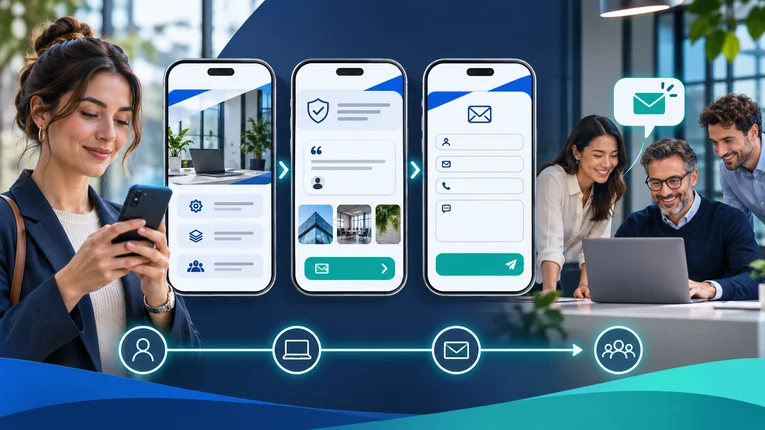
A website should answer the questions that hold buyers back. Visitors need to understand what the company does, whether it serves people like them, what proof exists, and what action to take next. The page structure should make those answers easy to find on a phone as well as a desktop.
We review navigation, service pages, forms, page speed, trust signals, and the journey between informational content and commercial pages. We also look for hidden friction. A form may ask for too much information. A call button may disappear on mobile. A service page may explain the process but never say who the service is for. Small problems can reduce response even when the traffic source is strong.
Our website design work shows how clear structure, responsive design, and focused user journeys can support action without making the experience feel forced.
Design decisions need evidence. We use search intent, campaign data, enquiries, and behaviour on the site to decide what deserves attention. The aim is not to add more visual effects. It is to make the next step obvious and remove reasons for a suitable buyer to leave.
Technology supports the customer journey

Some growth problems cannot be solved with copy or ads. A business may need a faster content system, a custom dashboard, an API connection, better lead routing, or automation between its website and internal tools. In those cases, development is part of the marketing system because it affects speed, accuracy, and the customer’s experience.
We define the business requirement before choosing the technology. A custom build only makes sense when it solves a clear operational problem. If an existing tool can do the job reliably, using it may be the better decision. If the process is unusual or important enough to justify custom work, the scope should explain what the system must do, who will use it, and how success will be checked.
Our development samples show the type of systems this work can produce, including web applications, dashboards, APIs, automation, and integrations.
Security and maintenance are included in this thinking. A system that generates leads but creates unnecessary risk is not a sound growth asset. Access controls, backups, software updates, secure data handling, and recovery planning protect the value created by the rest of the work.
Content is built around buyer questions
A useful content plan starts with questions buyers ask before they make a decision. Some are early questions about a problem. Others compare possible solutions, prices, risks, or providers. Each article should have a purpose within that journey and a clear relationship with the service pages that can help the reader act.
We avoid publishing broad articles only to fill a calendar. A focused article that answers a real question and points readers to the right next page is more useful than five generic posts. The internal links matter because they help readers continue their research and help search engines understand how topics relate across the site.
Google’s [LINK: SEO Starter Guide also recommends organizing sites logically, using descriptive URLs, and creating useful content for people rather than chasing shortcuts.
The best topic is not always the one with the largest headline search volume. Commercial relevance, the strength of the available evidence, competition, and the business’s ability to serve the reader all matter. A smaller query can be more useful when it attracts the right buyer at the right time.
Paid media tests demand without hiding weak foundations
Paid campaigns can produce feedback quickly. They show which messages attract attention, which audiences respond, and where visitors stop. That speed is useful, but it can also hide a weak offer if the team keeps increasing spend instead of fixing the page or follow up process.
We start with controlled tests and agreed limits. The first objective is to learn which combination of audience, message, offer, and landing page produces a qualified response. Once that combination works, scaling becomes a business decision based on cost and capacity rather than excitement about click numbers.
If the sales team cannot handle additional enquiries, scaling the campaign can damage the customer experience. If the average sale cannot support the acquisition cost, more volume makes the problem larger. Growth planning must account for operations and margin, not only campaign performance.
Measurement changes what the team does next

Reporting should lead to a decision. We track outcomes such as qualified enquiries, sales, revenue attribution where available, acquisition cost, and conversion rate. Supporting signals such as form starts, phone clicks, page engagement, and search visibility can help explain why those outcomes changed.
Numbers need context. A lower cost per lead is not an improvement if lead quality falls. More organic sessions are not automatically useful if they come from irrelevant topics. A higher conversion rate may reflect better targeting, a clearer page, or a change in the offer. The review should connect the number with a reasonable explanation and a testable next action.
The team then decides what to keep, what to change, and what to stop. This monthly learning cycle is where the system compounds. Successful pages earn more internal links. Strong campaign messages influence website copy. Sales objections become content topics. Technical fixes improve the performance of both organic and paid traffic.
A distributed team can still work as one unit
AKNEX Digital has teams in Oslo and Lahore. That structure gives clients access to marketing and technical skills without separating strategy from delivery. It also means documentation, ownership, and communication have to be clear. A plan that depends on one person remembering everything is fragile.
The AKNEX Digital explains how our teams in Oslo and Lahore connect marketing, engineering, and data around this operating model.
Each workstream needs an owner, a deadline, and an acceptance check. Clients should know what information we need from them and when a decision could affect the schedule. The delivery team should know which business result the task supports. This reduces rework and keeps specialists focused on the same outcome.
How the methodology works in practice
The work usually begins with discovery and an audit. We document the current customer journey, traffic sources, technology, offers, and measurement gaps. Next, we rank problems by commercial impact, effort, and dependency. A tracking error may need to be fixed before campaign decisions can be trusted. A slow landing page may need attention before more traffic is purchased.
The first delivery phase focuses on the few changes most likely to improve performance. Later phases can expand content, campaigns, automation, or custom development once the foundation is reliable. This sequence protects the budget because it avoids paying to send more visitors into a system that is not ready for them.
Results are reviewed against the agreed baseline, not against vague promises. Some channels provide useful feedback within days, while organic search and content need more time to build. The plan should reflect those differences and explain which early signs matter before final business results appear.
Frequently asked questions
Is the AKNEX Digital growth methodology suitable for small businesses?
Yes, when the scope matches the business. A smaller company may not need every service at once. The methodology helps identify the one or two constraints that matter most, then sequences other work after those are addressed.
Do we need a new website before marketing can start?
Not necessarily. We first review the existing site. Targeted changes to a landing page, form, message, or tracking setup may be enough. A rebuild makes sense when the current technology or structure prevents practical improvement.
How soon can a business expect results?
Paid campaigns can produce early feedback, but dependable results depend on the offer, market, website, budget, and sales process. Organic search normally takes longer. We set channel specific expectations after reviewing the starting position.
Can AKNEX Digital work with an internal marketing team?
Yes. The process can support an internal team by taking ownership of selected workstreams such as SEO, paid media, web development, measurement, or campaign production. Clear responsibilities prevent duplicated work.
What happens after launch?
We review performance, fix issues, and run the next agreed tests. A launch is the start of measurement. The following decisions should use what customers and campaign data reveal.
Build the system before adding more activity
The AKNEX Digital growth methodology connects commercial goals with the marketing, design, development, and measurement work needed to reach them. It gives each channel a defined role and gives the business a way to decide what deserves further investment.
If your current activity feels disconnected, request a free consultation and we can identify the part of the system that needs attention first.